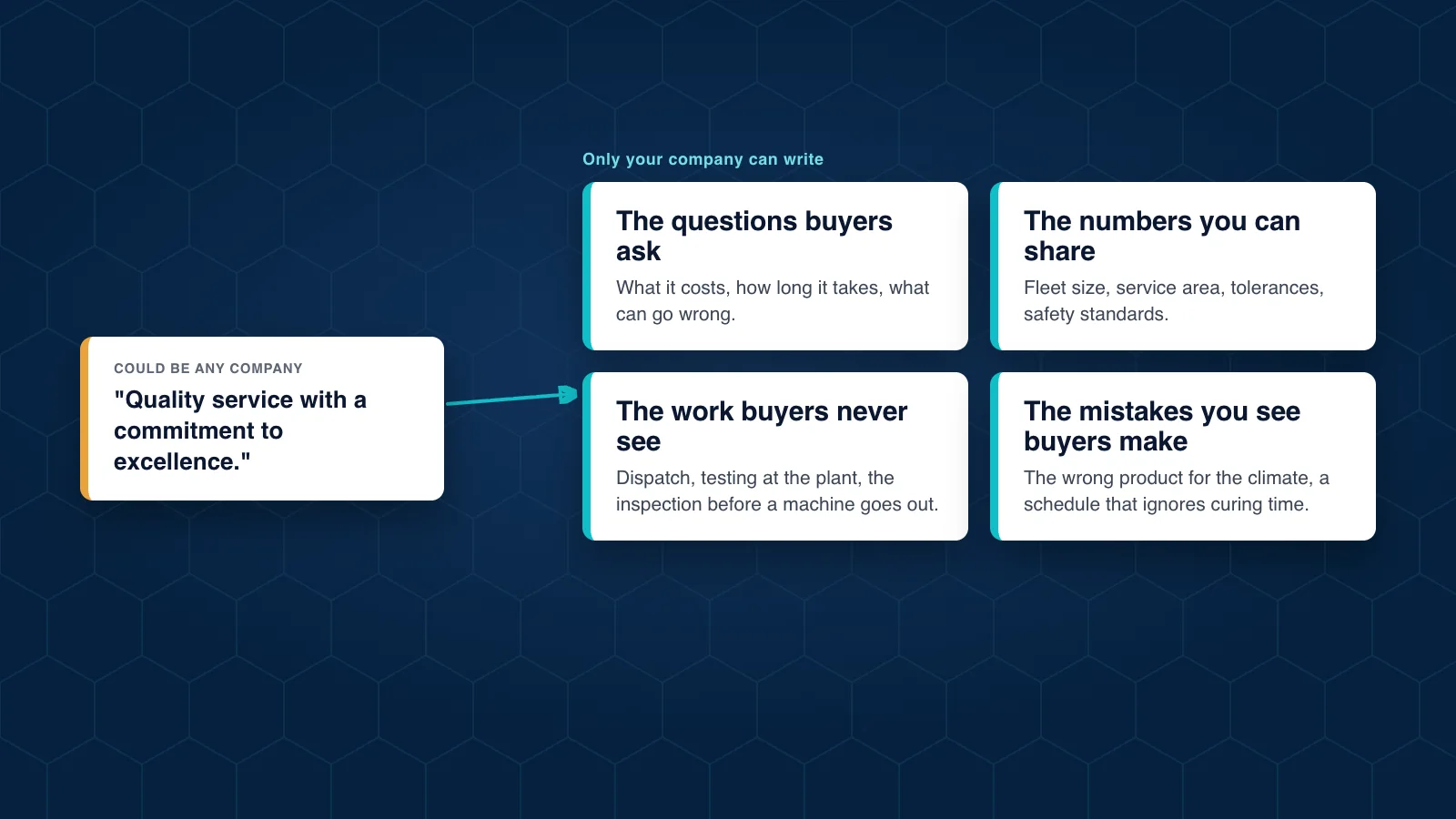
“Boring” usually means the content is generic, not that the industry is. A page that says “we provide quality service with a commitment to excellence” is dull in any trade. A page that explains why a concrete pour gets rescheduled when the forecast drops below a certain temperature, and what the company does about it, is interesting to anyone planning a pour.
Start with the buyer’s problem, not your company
The reader arrived with a job to do. A facilities manager wants to know whether to switch cleaning contractors mid-contract. A property manager wants to know what a missed trash pickup will cost to fix. Begin there. Your company becomes interesting when it is the one explaining how to solve the problem.
Four places to find material
The questions buyers ask
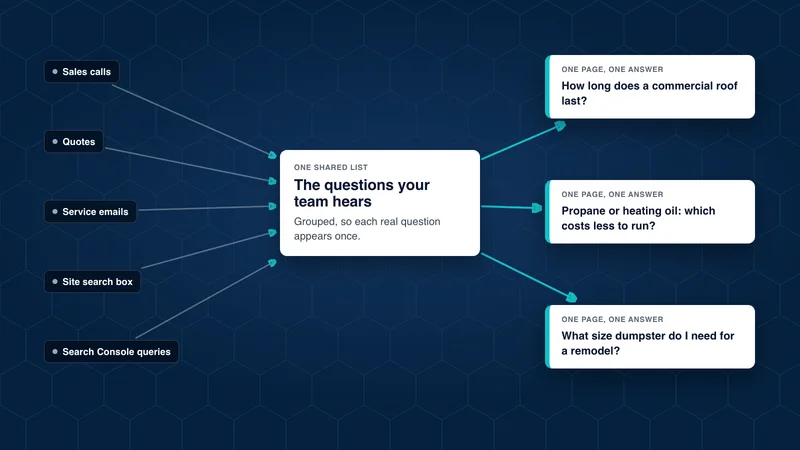
Your sales and service teams hear the same questions every week. Each one is a page waiting to be written, and our article on answering questions explains how to collect them.
The numbers you can share
Specific figures make a page credible: the size of your fleet, the area each depot covers, how long a typical job takes, the tolerances you work to, the safety standards you meet. Use only figures you can stand behind, and say what they refer to.
The work buyers never see
Most buyers never see the dispatch board at 5 a.m., the testing done at the plant or the inspection before a machine goes back out. Explaining how the work actually happens builds trust and answers questions buyers did not know to ask.
The mistakes you see buyers make
Every trade has expensive mistakes that experienced people spot immediately: the wrong product for the climate, a schedule that ignores curing time, a contract that leaves out disposal fees. Explaining them shows the experience Google’s quality guidelines value, and it is genuinely useful.
Write it plainly
- Cut the filler. Delete sentences that could appear on any competitor’s site. If a line would still be true after swapping your company name for another, replace it with a fact.
- Use the words buyers use. Write “dumpster” if that is what customers say, even if the industry term is “roll-off container.” Mention both if both are common.
- Be specific about place. Weather, soil, regulations and permits differ by region. Local detail is useful and hard to copy.
- Show real work. Photos of your crews, equipment and finished projects say more than stock images.
Let the experts talk
The most knowledgeable people in your company are rarely the ones writing the website. A 20-minute conversation with an estimator, a dispatcher or a service manager usually produces more usable material than a week of research. Record it, then write it up in their words and have them check the facts.
Make it easy to read
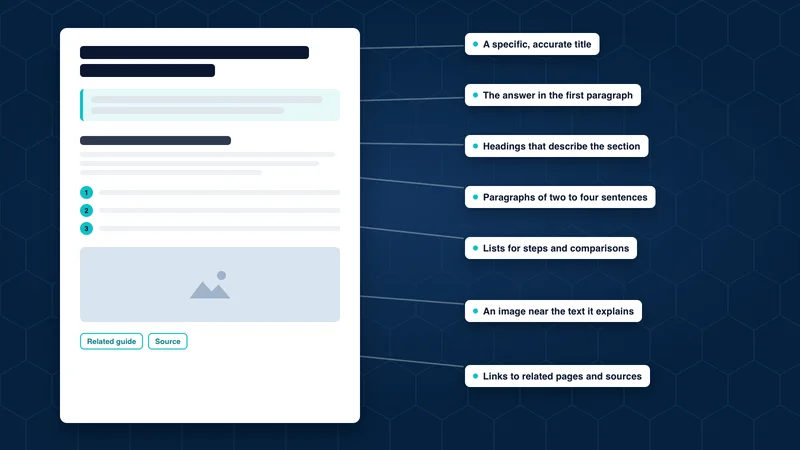
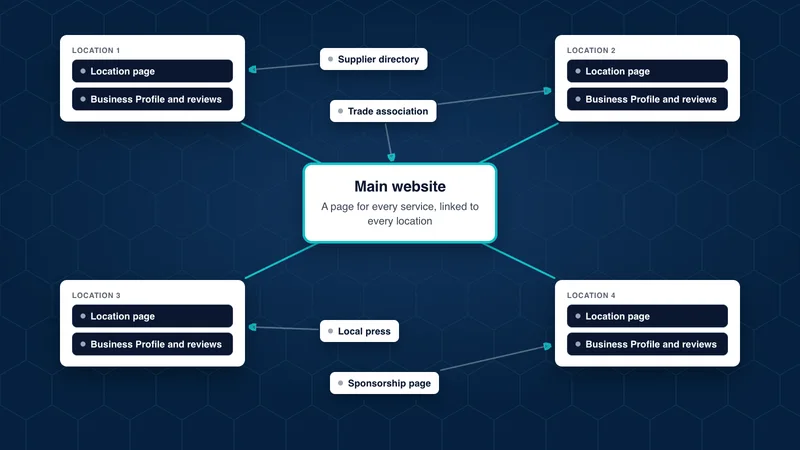
Interesting material still needs a clear layout: a direct answer at the top, descriptive headings, short paragraphs and lists for steps. Our guide on formatting a post so it gets read covers the details. For companies with several locations, our article on SEO for regional companies explains how this content supports each location’s search visibility.