Much of what gets written about SEO comes from media companies, software firms and online stores. Their advice is sound for them: publish a lot, chase trending topics, earn links with content that spreads. For a paving contractor, a fuel distributor, a cleaning company with four offices or an equipment dealer with stores in small towns, that advice misses where the buyers actually search.
How your buyers search
A buyer looking for a regional company usually searches for a service and a place, or for a service near them: “commercial snow removal Cedar Rapids,” “propane delivery near me,” “concrete contractor Lebanon PA.” Google often answers with a map of local businesses at the top, followed by organic results. Many of those searches also have a phone call or a quote request at the end.
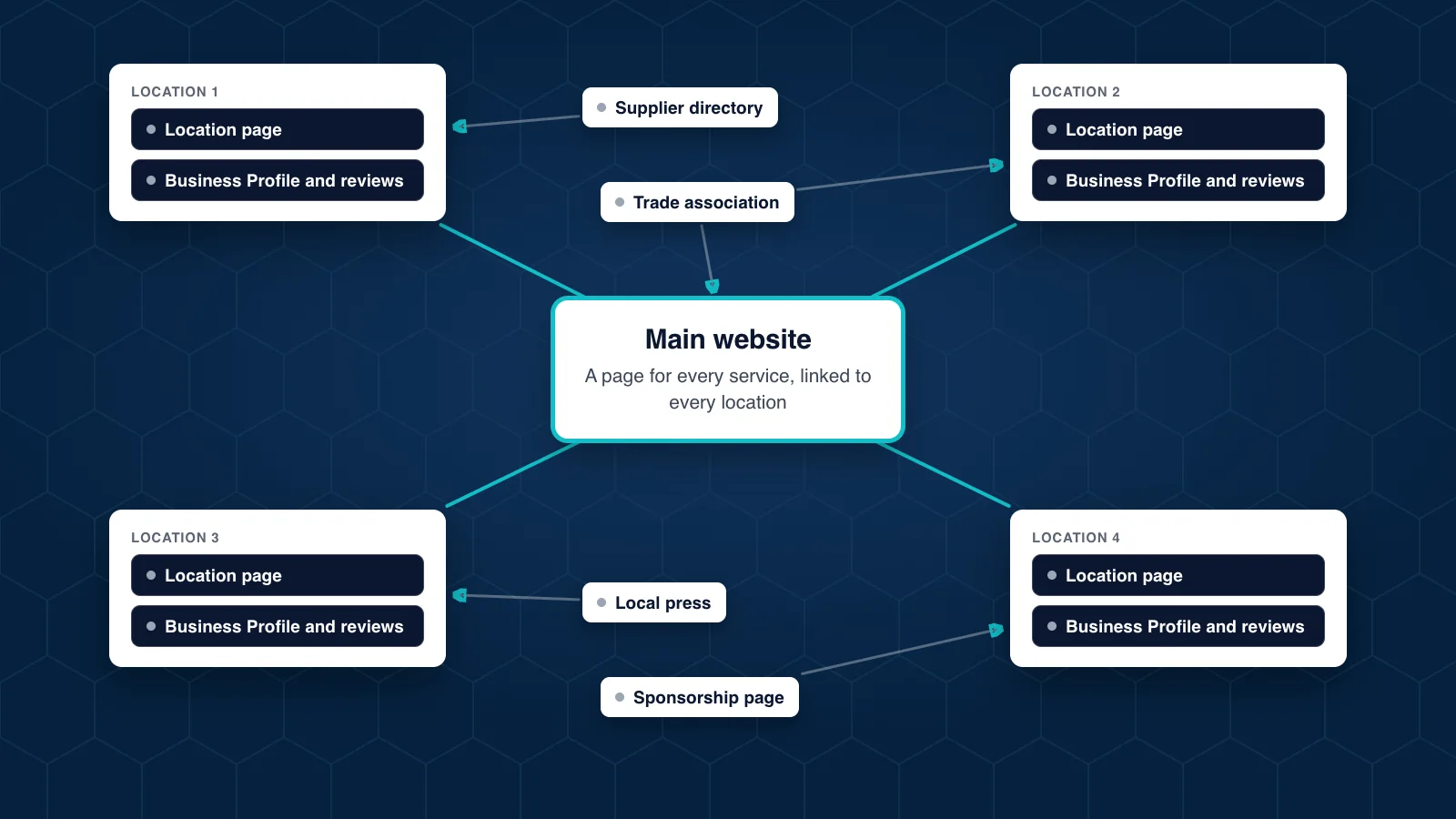
That means two things matter more than they do for an online publisher: your Google Business Profile for each location, and a page on your site for each service and each place you work.
Give every location its own presence
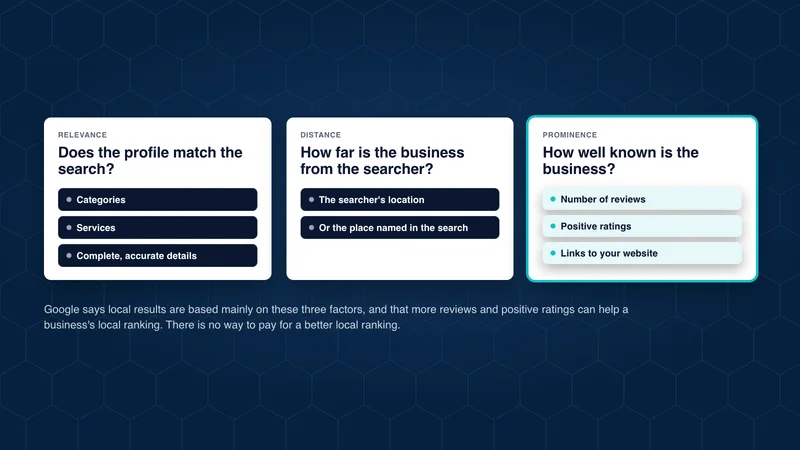
Google says local results are based mainly on relevance, distance and prominence. Each location needs to be clear on all three.
- A verified Business Profile for each real location, with the correct name, address, phone number, hours, categories and services. Google’s guidance says complete and accurate information makes a business more likely to appear.
- A location page on your site for each one, with its address, phone number, the area it serves, the services offered there, the team, and photos of the actual site and crews. Link the Business Profile to that page rather than to your home page.
- Steady, genuine reviews at every location, with replies. Our article on how reviews affect local rankings covers how to ask without breaking Google’s rules or the FTC’s.
Avoid creating pages for towns where you have no presence and only swapping the place name. Google’s spam policies call that doorway abuse, and buyers notice too.
Write service pages buyers can act on
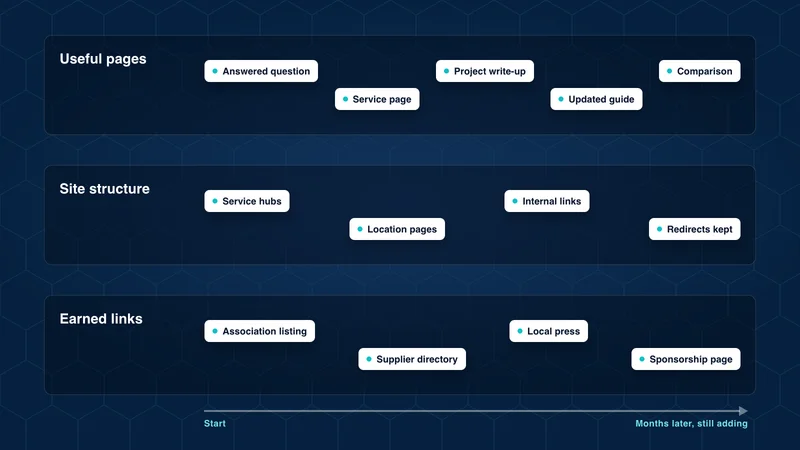
A single “Services” page with a list of everything you do gives Google little to show for any one search. A page for each service gives it a clear answer: what the service is, who it is for, the equipment and certifications involved, the areas covered, how scheduling and pricing work, and how to request a quote.
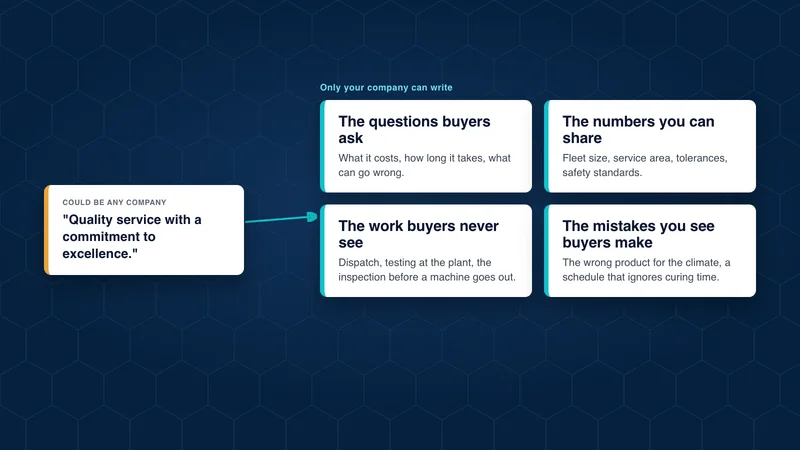
The details that make your company different are often the ones buyers want most. The size of your fleet, the plants or depots you run, your safety record, and the projects you have completed are all facts worth stating plainly. Our article on writing for industries people call boring has more on turning those facts into pages people read.
Earn links from the businesses around you
A regional company rarely needs content that goes viral. It already has relationships that produce good links:
- Manufacturers and suppliers with dealer, installer or partner directories
- Trade associations, chambers of commerce and certification bodies
- Customers, municipalities and institutions that publish project or vendor pages
- Local and trade press covering a new location, a large project or an acquisition
- Schools, teams and events you sponsor
These links tell Google that a real company stands behind the site, and they come from exactly the places buyers in your area already trust. Our article on long-term SEO explains why they are worth the effort.
Keep the facts the same everywhere
A company that has grown through acquisitions, merged two names or moved an office often has outdated details scattered across directories, old websites and Business Profiles. Conflicting names, addresses or phone numbers confuse buyers and make it harder for search engines to connect the listings to one company. Make an inventory of every listing and correct it, starting with Google, Apple Maps, Bing and the directories in your trade.
Measure by location and service
Report search results the way the business is run. Search Console can be filtered by page, so you can see clicks and impressions for each location and service page. Business Profile performance shows calls, direction requests and website clicks per location. Tie them to the calls and quote requests each branch receives, and you can see which locations need attention first.