Google retired Universal Analytics in 2023 and deleted its data in 2024. If your site still has an old tracking code beginning with “UA-“, it is not collecting anything. Older WordPress plugins built for it, such as Google Analyticator, have been closed. Here is how to set up measurement properly on WordPress today.
What each tool tells you
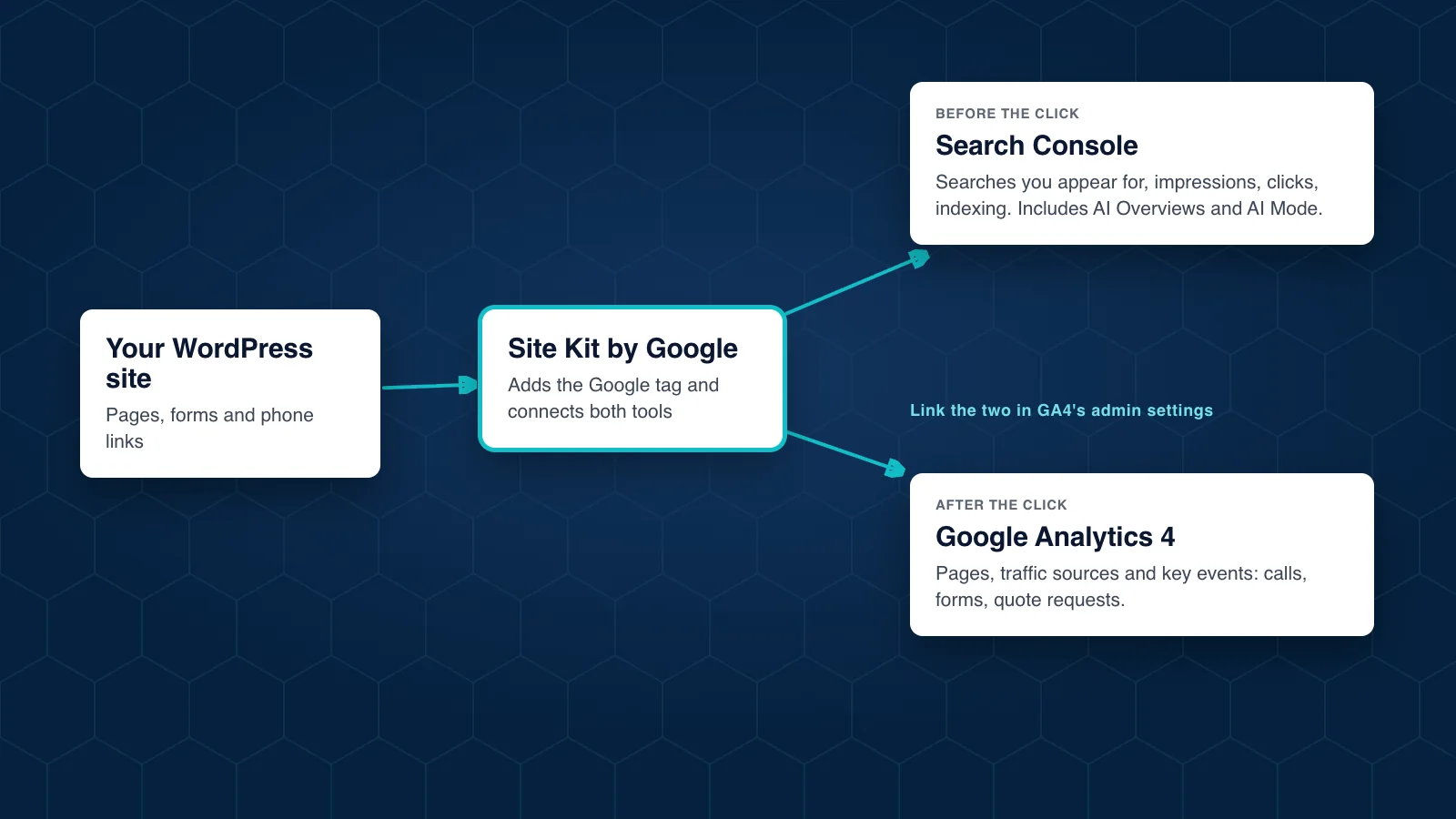
- Google Search Console reports how your site appears in Google Search before anyone clicks: the searches you show up for, impressions, clicks, average position, and which pages are indexed. Google says traffic from AI Overviews and AI Mode is included in its Performance report.
- Google Analytics 4 (GA4) reports what visitors do once they arrive, from every source: which pages they view, where they came from, and the actions you care about, such as calls and form submissions.
You need both. Search Console cannot see what happens after the click, and Analytics cannot see the searches where you appeared but nobody clicked.
Step 1: Create a GA4 property
Sign in to Google Analytics with a Google account your company controls, not a personal account belonging to an employee or a former vendor. Create an account for the company, a property for the website, and a web data stream for your domain. Keep enhanced measurement turned on, which records scrolls, outbound clicks, site searches and file downloads automatically.
Step 2: Install Site Kit by Google
In WordPress, go to Plugins, Add New, search for Site Kit by Google, then install and activate it. Its setup walks you through signing in with Google, verifying your site for Search Console and connecting your GA4 property. Site Kit adds the Google tag to every page, so there is no code to paste.
If your site already has the Google tag added another way, for example through Google Tag Manager or your theme, do not add it twice. A duplicate tag can record each page view twice.
Step 3: Verify Search Console
If Site Kit did not already do it, add your site in Search Console. A domain property, verified through your DNS settings, covers every version of your site, including www, non-www, http and https. Then submit your XML sitemap, which your SEO plugin creates.
Step 4: Track the actions that matter as key events
Page views are not the goal. Calls, quote requests and form submissions are. In GA4, these are called key events.
- Form submissions: most form plugins can send an event when a form is submitted, or redirect to a thank-you page you can track.
- Phone calls: track clicks on
tel:links as an event. For calls from people who dial the number without clicking, call tracking software can connect calls to sources. - Email clicks on
mailto:links, and other actions such as downloads of a price list or spec sheet.
Then mark each one as a key event in GA4’s admin settings.
Step 5: Link Search Console and Analytics
In GA4’s admin settings, link your Search Console property. This adds Search Console reports inside Analytics, so you can see search queries alongside what visitors did on the landing page.
The reports worth checking each month
- Search Console, Performance: clicks, impressions and queries for your key service and location pages.
- Search Console, Page indexing: important pages that are not indexed, and why.
- GA4, Traffic acquisition: where visitors come from, including organic search, paid search, email and referrals.
- GA4, Key events: which sources and pages produce calls and form submissions.
Privacy and consent
GA4 collects information about visitors, so update your privacy policy to describe it. If you have visitors in regions with consent laws, such as the European Economic Area, use a consent banner that works with Google’s consent mode. Ask your legal advisor what applies to your business.
For the rest of the plugins a business site needs, see our guide to useful WordPress plugins.